BirdDog's Guide For Excess Residual Fertility on Timber Ground

BirdDog Guide For Excess Residual Fertility on Timber Ground 

At BirdDog, we help timber landowners unlock a powerful but often overlooked tax benefit: deducting the value of excess residual fertility—the nutrients above optimum levels already present in your soil at acquisition. Through comprehensive soil testing, accredited agronomic analysis, and expert valuation, we document the measurable nutrient value in your timber ground, typically ranging from $750-$2,500 per acre depending on nutrient concentrations and land history. 

Section 180 is the most commonly referenced tax code section for this kind of deduction. However, it requires land to be agriculture producing (crops or livestock), and unless you are running livestock under the trees or harvesting pine needles timber does not qualify.  

This does not rule out Timber. CPAs we work with typically choose one of two other tax code pathways, each suited to different financial situations: 

Sections 167 & 168 

provide the steady approach—spread the deduction over 7 years on a fixed depreciation schedule. This works well for landowners who prefer predictable, recurring tax benefits without annual re justification 

Section 611 

delivers the precision option—deduct annually based on actual nutrient depletion as trees grow and extract nutrients, even without harvest. This method requires ongoing agronomic modeling but aligns deductions with biological reality. 

BirdDog delivers the excess residual fertility value and documentation package; your tax advisor determines which code maximizes your specific benefit.

Section 611: The "Using It Up" Tax Deduction 

The Core Idea 

When your land contains valuable natural stuff—oil, gas, minerals, timber, soil nutrients—the IRS lets you deduct value as that stuff gets used up. That's called depletion.

Who qualifies? 

Anyone who owns land with depletable resources. You don't have to be actively farming—passive owners and cash rent landlords qualify too. 

How It Works for Soil Nutrients 

You must use cost depletion (the only method allowed for nutrients): 1.Measure what's there 

2.Estimate useful life 

3.Deduct annually 

Example: 

1.soil test shows $300K in nutrients 

2.10 years of crop/grass uptake 

3.$30K/year 

That deduction hits your taxable income even if you spent nothing that year. The Key Insight: You Don't Need a Harvest to utilize Section 180 

Most people assume depletion requires removing something—cutting timber, pumping oil. But Section 611 actually says depletion occurs when the resource is used or exhausted. 

The Analogy 

Think of your soil like a phone battery. You don't have to drain it to 

zero (harvest) to know it's depleting. Every app running in the 

background (trees growing, grass regrowing, cattle grazing) pulls 

power. The battery is depleting whether you "use" the phone or not. 

What Triggers a Valid Annual Deduction Scenario Deductable Why? 

Timber growing (no harvest) 

Trees consume nutrients 

Cattle Grazing Pastures - Grass regrowth extracts nutrients 

Timber & Grazing - Multiple uptake pathways 

Bare/Idle Land - No measureable depletion 

The Four Requirements: 

To deduct without a harvest, you must prove: 

1.Resource existed — Verified by soil testing 

2.Resource was depleted — Biological uptake occurred (growth, grazing) 3.Depletion is quantifiable — Reasonable estimate with supporting methodology 4.Method is consistent — Same approach year over year 

Why Most CPAs Miss This 

They default to harvest-based depletion because it's easy math (units cut = units depleted). Growth-based depletion requires agronomic modeling—more work, but fully allowed under the code. 

Bottom Line 

Section 611 doesn't require you to remove something from the land. It requires you to prove something was used up. Growing trees and grazing livestock are constantly extracting nutrients—that's depletion, and it's deductible annually.

Sections 167 & 168: The "Scheduled Write-Off" Tax Deduction 

The Core Idea 

When you buy land with valuable soil nutrients already in it, the IRS lets you deduct that value—but you have to spread it out over several years on a fixed schedule. That's depreciation. 

How Section 167 & 168 Work Together 

Sections 167Sections 168 

The Permission Slip 

You're allowed to deduct assets that wear out over time 

The Rulebook 

Here's exactly how many years and what math to use 

The Schedule for Soil Nutrients 

Since the IRS never defined a lifespan for soil nutrients, they default to 7 years. 

Example 

Soil test proves $700K in excess residual fertility 

7-year schedule = $100K deduction per year for 7 years 

You didn't spend new cash—but your taxable income drops $100K annually. 

The Analogy: Think of it like a car loan in reverse. When you finance a truck, the bank says "you'll pay $500/month for 60 months—no negotiating mid-stream." Depreciation works the same way: the IRS gives you a fixed payout schedule. Predictable, but inflexible.

Why Landowners Like This Approach 

Benefit Why It Matters 

Set-and-forget Tax software tracks it automatically 

No annual re-justificationCPA doesn't have to defend it each year 

Clear visibilityYou know exactly how much is left to deduct 

The Downside: No Flexibility 

If your nutrients are depleting faster than the schedule (aggressive cropping, land conversion), you're stuck. You can't accelerate the deduction—you must follow the IRS formula regardless of actual usage.

Section 180: Assuming You Have an Ag Operation on the Property 

The Core Idea 

Section 180 lets you create the loss of the full value of soil nutrients in the year you buy the land—no spreading required. But how that deduction works depends on whether you're active or passive. 

Who Qualifies: 

Both active and passive landowners can use Section 180. The difference is where the deduction lands: 

Owner Type How Itʼs Treated What it Offsets 

(materially participates) Active loss on Schedule FAny income - W-2, 

Active 

business, etc. 

Passive 

(collects rent, no particpation) Passive loss Only passive income 

The Analogy: Think of it like airline miles. 

Everyone earns them, but they sit in 

different buckets. 

Active owners get "cash equivalent" miles— 

spend them anywhere. Passive owners get 

"partner only" miles—they're still valuable, 

but you can only redeem them in specific 

situations.

Example: Passive Landowner 

Landowner buys farmland with $400K in verified excess residual fertility and leases it out for $80K/year in rent 

Year 1: 

Section 180 deduction: $400K 

Passive rental income: $80K 

Taxable passive income: $0 

Remaining loss carried forward: $320K 

Year 3: 

Carryforward entering year 3: $240K (after offsetting $80K rent in year 2) Passive rental income: $80K 

Sell another property, generate $200K passive gain 

Total passive income: $280K 

Apply $240K of remaining carryforward 

Taxable passive income: $40K 

Remaining carryforward: $0 

The $400K deduction shielded $360K of passive income over three years—then it's exhausted.

Benefit Why It Matters 

Immediate write-off Full deduction in year of purchase 

No modeling required Avoids depletion calculations (611) 

No schedule lock-inAvoids 7-12 year depreciation (167/168) 

Loss bankingPassive losses carry forward 

indefinetely 

Bottom Line: Section 180 is the fastest path to deducting soil nutrients—full value, year one. Active owners can use it against any income. Passive owners bank it for future passive gains. The trade-off: a giant deduction isn't always better than a strategic one. 

For inquiries, contact us. 

www.BirdDogit.com 

Michael@BirdDogit.com 

Read More...

Hunting & Adventure
Conservation Awareness

For generations, hunters have played a critical role in protecting wildlife habitat, supporting healthy animal populations, and funding conservation efforts across the country. Hunting is not just a tradition or outdoor recreation — it is deeply tied to land stewardship and the long-term health of our natural resources.

Read More
Wildlife & Land Management
Habitat Management

Late winter is one of the most important times of the year for wildlife habitat management in Texas. As hunting seasons wrap up and the landscape begins transitioning toward spring growth, smart habitat work now can dramatically improve forage, cover, and wildlife health for the entire year — setting your ranch or property up for long-term success.

Read More
Fishing & Adventure
Managing Your Bass Pond in Winter

Winter pond management is one of the most overlooked — and most important — parts of maintaining a healthy bass fishery in Texas. While many landowners assume their pond “takes care of itself” once the weather cools down, the truth is that winter is when your pond sets the foundation for spring growth, forage success, and bass health.

Read More

BirdDog's Guide For Excess Residual Fertility on Timber Ground
BirdDog Guide For Excess Residual Fertility on Timber Ground 

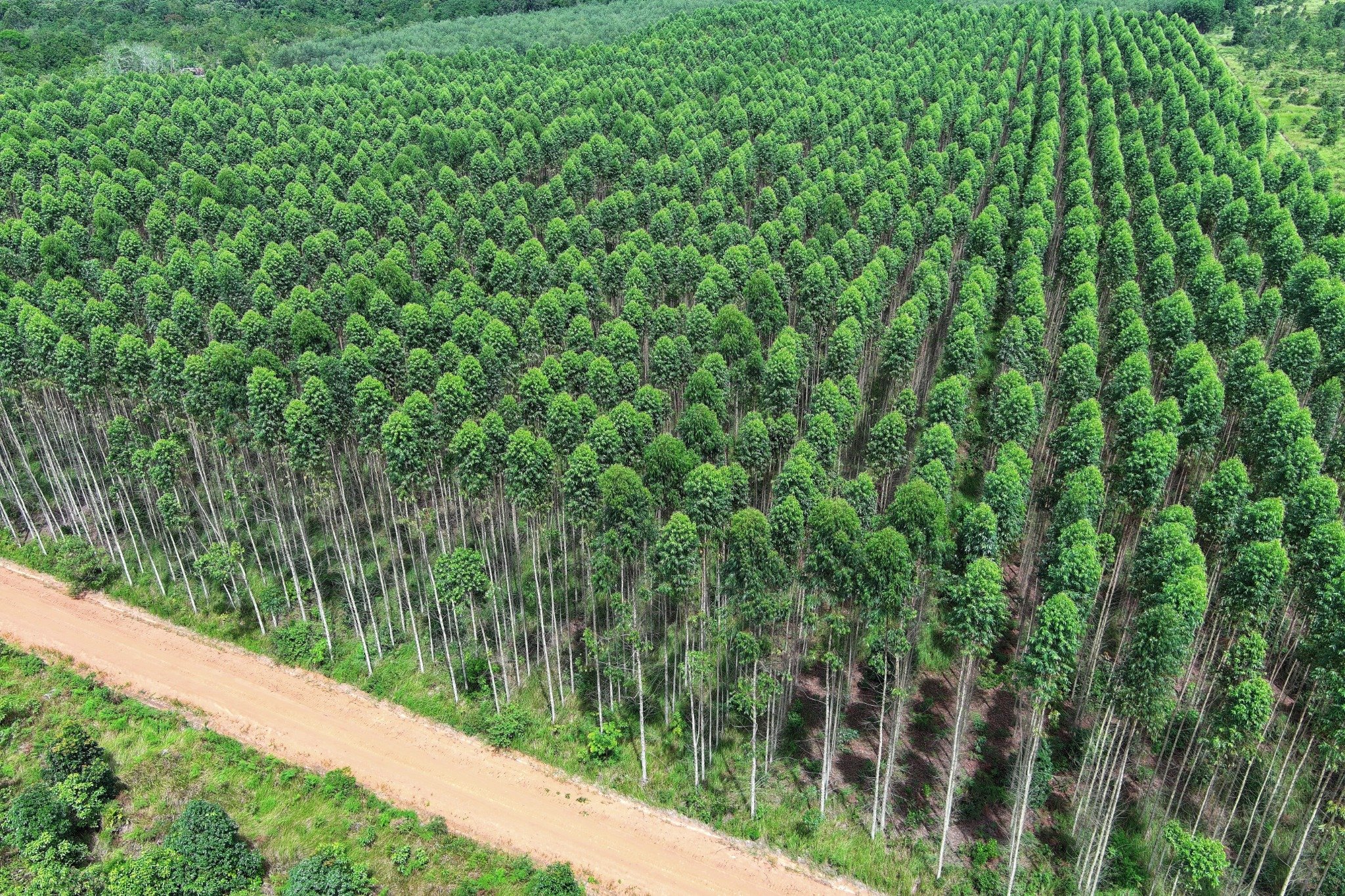
At BirdDog, we help timber landowners unlock a powerful but often overlooked tax benefit: deducting the value of excess residual fertility—the nutrients above optimum levels already present in your soil at acquisition. Through comprehensive soil testing, accredited agronomic analysis, and expert valuation, we document the measurable nutrient value in your timber ground, typically ranging from $750-$2,500 per acre depending on nutrient concentrations and land history. 

Section 180 is the most commonly referenced tax code section for this kind of deduction. However, it requires land to be agriculture producing (crops or livestock), and unless you are running livestock under the trees or harvesting pine needles timber does not qualify.  

This does not rule out Timber. CPAs we work with typically choose one of two other tax code pathways, each suited to different financial situations: 

Sections 167 & 168 

provide the steady approach—spread the deduction over 7 years on a fixed depreciation schedule. This works well for landowners who prefer predictable, recurring tax benefits without annual re justification 

Section 611 

delivers the precision option—deduct annually based on actual nutrient depletion as trees grow and extract nutrients, even without harvest. This method requires ongoing agronomic modeling but aligns deductions with biological reality. 

BirdDog delivers the excess residual fertility value and documentation package; your tax advisor determines which code maximizes your specific benefit.

Section 611: The "Using It Up" Tax Deduction 

The Core Idea 

When your land contains valuable natural stuff—oil, gas, minerals, timber, soil nutrients—the IRS lets you deduct value as that stuff gets used up. That's called depletion.

Who qualifies? 

Anyone who owns land with depletable resources. You don't have to be actively farming—passive owners and cash rent landlords qualify too. 

How It Works for Soil Nutrients 

You must use cost depletion (the only method allowed for nutrients): 1.Measure what's there 

2.Estimate useful life 

3.Deduct annually 

Example: 

1.soil test shows $300K in nutrients 

2.10 years of crop/grass uptake 

3.$30K/year 

That deduction hits your taxable income even if you spent nothing that year. The Key Insight: You Don't Need a Harvest to utilize Section 180 

Most people assume depletion requires removing something—cutting timber, pumping oil. But Section 611 actually says depletion occurs when the resource is used or exhausted. 

The Analogy 

Think of your soil like a phone battery. You don't have to drain it to 

zero (harvest) to know it's depleting. Every app running in the 

background (trees growing, grass regrowing, cattle grazing) pulls 

power. The battery is depleting whether you "use" the phone or not. 

What Triggers a Valid Annual Deduction Scenario Deductable Why? 

Timber growing (no harvest) 

Trees consume nutrients 

Cattle Grazing Pastures - Grass regrowth extracts nutrients 

Timber & Grazing - Multiple uptake pathways 

Bare/Idle Land - No measureable depletion 

The Four Requirements: 

To deduct without a harvest, you must prove: 

1.Resource existed — Verified by soil testing 

2.Resource was depleted — Biological uptake occurred (growth, grazing) 3.Depletion is quantifiable — Reasonable estimate with supporting methodology 4.Method is consistent — Same approach year over year 

Why Most CPAs Miss This 

They default to harvest-based depletion because it's easy math (units cut = units depleted). Growth-based depletion requires agronomic modeling—more work, but fully allowed under the code. 

Bottom Line 

Section 611 doesn't require you to remove something from the land. It requires you to prove something was used up. Growing trees and grazing livestock are constantly extracting nutrients—that's depletion, and it's deductible annually.

Sections 167 & 168: The "Scheduled Write-Off" Tax Deduction 

The Core Idea 

When you buy land with valuable soil nutrients already in it, the IRS lets you deduct that value—but you have to spread it out over several years on a fixed schedule. That's depreciation. 

How Section 167 & 168 Work Together 

Sections 167Sections 168 

The Permission Slip 

You're allowed to deduct assets that wear out over time 

The Rulebook 

Here's exactly how many years and what math to use 

The Schedule for Soil Nutrients 

Since the IRS never defined a lifespan for soil nutrients, they default to 7 years. 

Example 

Soil test proves $700K in excess residual fertility 

7-year schedule = $100K deduction per year for 7 years 

You didn't spend new cash—but your taxable income drops $100K annually. 

The Analogy: Think of it like a car loan in reverse. When you finance a truck, the bank says "you'll pay $500/month for 60 months—no negotiating mid-stream." Depreciation works the same way: the IRS gives you a fixed payout schedule. Predictable, but inflexible.

Why Landowners Like This Approach 

Benefit Why It Matters 

Set-and-forget Tax software tracks it automatically 

No annual re-justificationCPA doesn't have to defend it each year 

Clear visibilityYou know exactly how much is left to deduct 

The Downside: No Flexibility 

If your nutrients are depleting faster than the schedule (aggressive cropping, land conversion), you're stuck. You can't accelerate the deduction—you must follow the IRS formula regardless of actual usage.

Section 180: Assuming You Have an Ag Operation on the Property 

The Core Idea 

Section 180 lets you create the loss of the full value of soil nutrients in the year you buy the land—no spreading required. But how that deduction works depends on whether you're active or passive. 

Who Qualifies: 

Both active and passive landowners can use Section 180. The difference is where the deduction lands: 

Owner Type How Itʼs Treated What it Offsets 

(materially participates) Active loss on Schedule FAny income - W-2, 

Active 

business, etc. 

Passive 

(collects rent, no particpation) Passive loss Only passive income 

The Analogy: Think of it like airline miles. 

Everyone earns them, but they sit in 

different buckets. 

Active owners get "cash equivalent" miles— 

spend them anywhere. Passive owners get 

"partner only" miles—they're still valuable, 

but you can only redeem them in specific 

situations.

Example: Passive Landowner 

Landowner buys farmland with $400K in verified excess residual fertility and leases it out for $80K/year in rent 

Year 1: 

Section 180 deduction: $400K 

Passive rental income: $80K 

Taxable passive income: $0 

Remaining loss carried forward: $320K 

Year 3: 

Carryforward entering year 3: $240K (after offsetting $80K rent in year 2) Passive rental income: $80K 

Sell another property, generate $200K passive gain 

Total passive income: $280K 

Apply $240K of remaining carryforward 

Taxable passive income: $40K 

Remaining carryforward: $0 

The $400K deduction shielded $360K of passive income over three years—then it's exhausted.

Benefit Why It Matters 

Immediate write-off Full deduction in year of purchase 

No modeling required Avoids depletion calculations (611) 

No schedule lock-inAvoids 7-12 year depreciation (167/168) 

Loss bankingPassive losses carry forward 

indefinetely 

Bottom Line: Section 180 is the fastest path to deducting soil nutrients—full value, year one. Active owners can use it against any income. Passive owners bank it for future passive gains. The trade-off: a giant deduction isn't always better than a strategic one. 

For inquiries, contact us. 

www.BirdDogit.com 

Michael@BirdDogit.com 

Read More...

Hunting & Adventure
Conservation Awareness

For generations, hunters have played a critical role in protecting wildlife habitat, supporting healthy animal populations, and funding conservation efforts across the country. Hunting is not just a tradition or outdoor recreation — it is deeply tied to land stewardship and the long-term health of our natural resources.

Read More
Wildlife & Land Management
Habitat Management

Late winter is one of the most important times of the year for wildlife habitat management in Texas. As hunting seasons wrap up and the landscape begins transitioning toward spring growth, smart habitat work now can dramatically improve forage, cover, and wildlife health for the entire year — setting your ranch or property up for long-term success.

Read More
Fishing & Adventure
Managing Your Bass Pond in Winter

Winter pond management is one of the most overlooked — and most important — parts of maintaining a healthy bass fishery in Texas. While many landowners assume their pond “takes care of itself” once the weather cools down, the truth is that winter is when your pond sets the foundation for spring growth, forage success, and bass health.

Read More